Home / Thinking Zone / Bringing it all together
Trust in technology series: Bringing it all together
Throughout my exploration of Trust in Tech, I have looked at some of the arenas where the concept of trust plays a major role - education, healthcare, retail, communication - and what they all have in common is that trust is difficult to build and easy to break. To trust or not to trust? That is the question – and most people would say, on balance, maybe not.
To re-cap quickly...
Posted 28 October 2025

The Trust in Tech series began with Human or AI? A Modern Frankenstein Tale, which was an interview with the writer of Frankie Stein, a play by Stellar Quines Theatre Company. In it, the ‘creature’ - a half-human, half-AI bot – ultimately chose to remain AI in response to human cruelty, highlighting the tendency to mistrust one another more than the technology we build.
The second piece Hacking Mistrust, featured a conversation with PhD researcher Jack Archer of the University of Edinburgh, and examined why people often mistrust the humans behind technology more than the technology itself - a theme made visible in high-profile cyberattacks on Coop, Harrods and M&S.
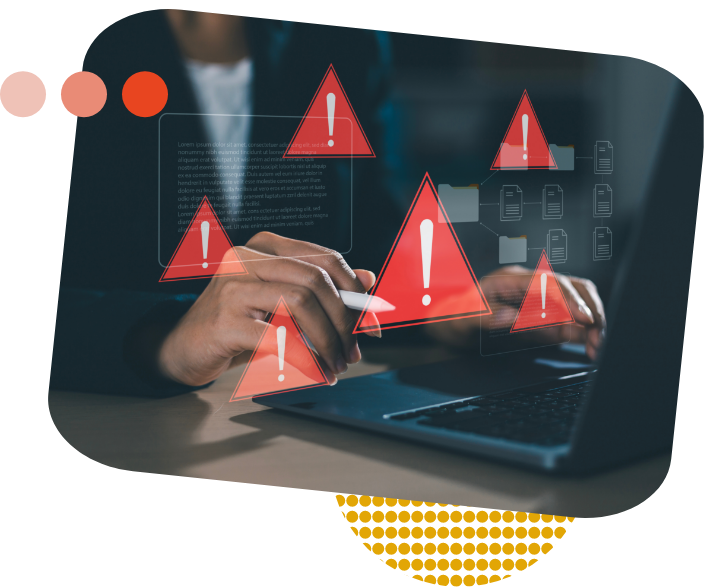
The series then turned to healthcare in The Heart & Soul of Healthcare Systems, where new technologies promise breakthroughs but sit on fragile foundations of mistrust, particularly among communities who have endured exploitation, discrimination and breaches of consent, leaving them with a lasting legacy of suspicion.
In the fourth piece, It’s Good to Talk, the focus shifted to communication and the finding that younger generations often avoid phone calls in favour of texts – perhaps reflecting how early experiences of trust and caregiving shape how we lean on or substitute technology in later life.
And most recently, Trust, Technology and the Human Core of Education, examined how AI, with tools like ChatGPT5 capable of generating PhD-level responses, is transforming classrooms and disrupting the old model of teachers as sole authorities, raising pressing questions about how trust in education is being reshaped.
All of these pieces explored the very many reasons why we find it problematic to trust, perhaps linked to our varied psychological make up and past experiences. But there are also valid concerns about the technology we use – privacy issues, data leakages, repetition of bias, misinformation. And when you mix all of this up, it is inevitable that there will be emotional entanglement over what is ‘real’ and what can be trusted. In the space of writing this piece alone there have been several headlines which have tested our trust – a cyberattack on a children’s nursery, an AI actor being cited as the next ‘big thing’ in Hollywood, and criticisms aimed at the personal and governmental choices made by politicians.
There are also increasingly complex challenges to our notion of what is real and what is not given to us by technology – and this, I have found, can really mess with the mind. If we don’t know what is real, how can we measure what is true? And how do we factor in opinion, preference and bias?
Everybody curates their own lives – a cursory glance at social media will tell us that. And you don’t necessarily need to attain an absolute truth in order to engage with the world around you, you just need to know that within your own sphere, you are working with the most authentic version of yourself and the information available. Essentially, by keeping the human in tech.
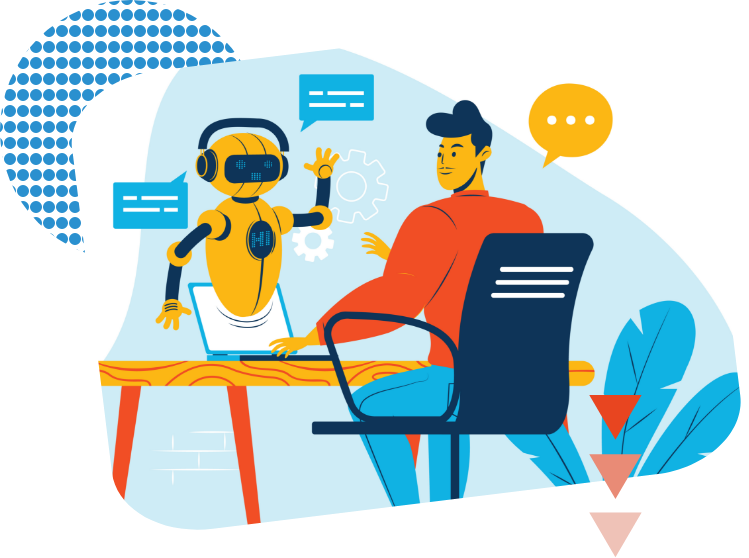
With this in mind, I’ve been attending several events recently where people have engaged in really interesting conversations around exactly this – keeping the human in tech – and it seems it’s something we can all relate to. Going to things in person has enabled me to connect and listen in a way which is just not possible online. I have observed interactions, seen artworks, listened to experts, joined in with discussions – and even on my journeys to and from the events, I have looked out of the train window at the sky, had more conversations (yes, I am one of those passengers), and responded to stimuli in real time. I have been a humble human, out in the world and I feel this is important. But can it really be that simple? Is merely ‘getting out there’ enough to qualify me as someone who has something to say about being human in an increasingly online environment?
Being ‘authentic’ has always been important in relationships – professional or otherwise – and yet amongst the noise of the online world, authenticity seems more elusive than ever.
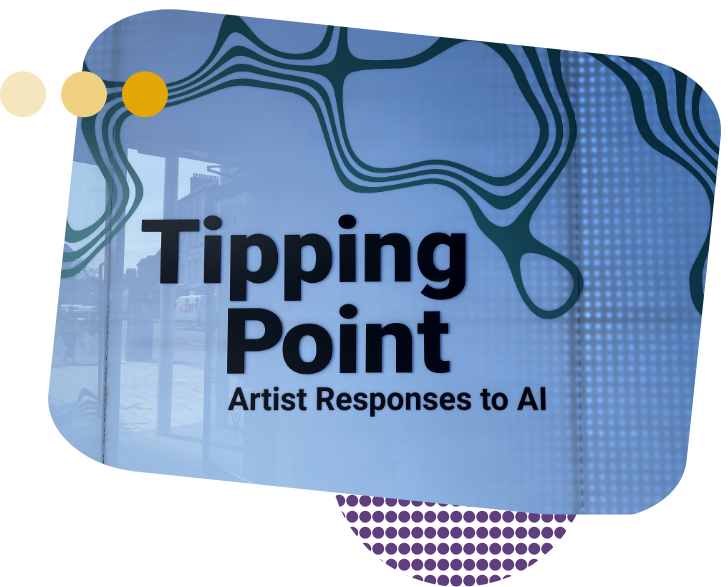
Perhaps that is why the topics of authenticity and trust within technology were such a good fit with two art exhibitions I visited over the summer: ‘Tipping Point: Artists Responses to AI’ and ‘Authenticity Unmasked: Unveiling AI-Driven Realities Through Art’. As is so often the case, the creative arts can take a sideways look at the big issues and help us to go deeper. Both exhibitions invited viewers to engage with matters concerning responsible AI, human agency, data governance, social wellbeing and environmental sustainability; and asked questions such as, when does authenticity in digital content matter to us? What influences our perception of what is real or fabricated? What shapes our trust in human-made creations? Experiencing the artworks for myself and taking part in a tour of all of the works on show was something which could only have been done in person. Whilst this insight is nothing new, it’s amazing how easy it is to forget that simply going out and doing the ‘in real life’ activities are essential to building connection and trust.
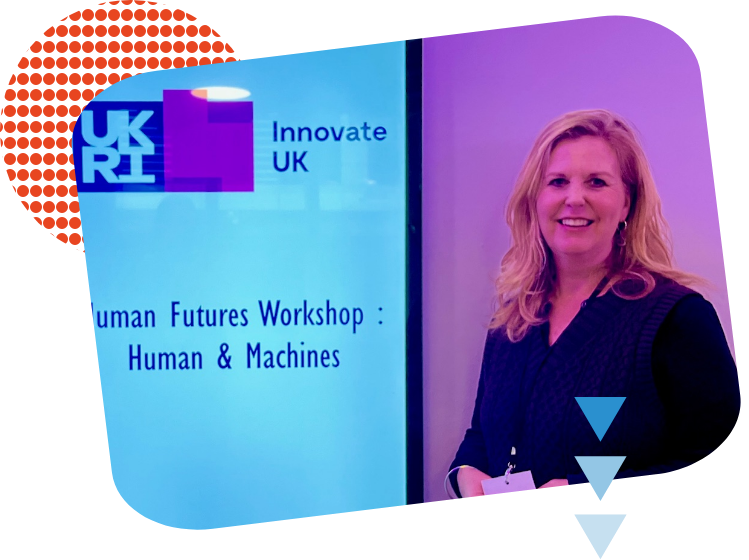
In addition, I attended the Human Futures Workshop: Humans and Machines with Innovate UK, and as part of the day’s activities, we were tasked to imagine an artefact from the future. Mine was a contact lens which would help people discern what sources of information to trust – perhaps echoing Stanley G. Weinbaum’s ‘Pygmalion’s Spectacles’ (often conceptually linked to the beginnings of Virtual Reality which I wrote about last year). My rather unoriginal future artefact was met with some amusement at the workshop, but also a recognition of the potential need for such an item; as well as questions around who and how we decide which sources to trust. You could drive yourself mad trying to get at what ‘truth’ really is – and philosophers have been debating this for centuries, with no real solution.
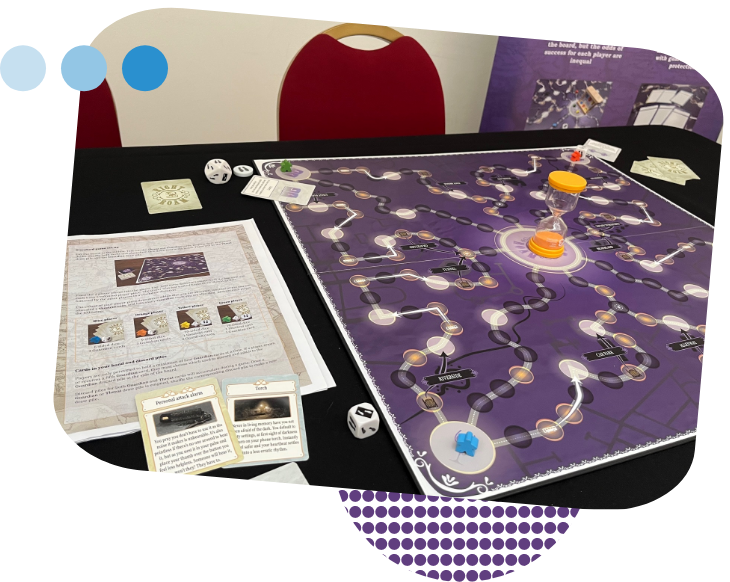
I was also able to visit ‘Play for Good: beyond the pixels’, organised by the University of Abertay’s Game Lab and part of the Royal Society of Edinburgh’s Festival of Curiosity. It was a chance to hear from them about their work developing digital technologies and physical artefacts addressing challenges in health, wellbeing, and social inclusion – using games and play for good. Projects included virtual reality games used in rehabilitation and live performance, a table-top game dealing with themes of social inequalities, playful engagements with club culture and nature, using game development for digital youth inclusion, and playing games using a bike as a controller. What really struck me was how essential it was to all of the game developers, that the human be considered at all times, and it was clear to see how the technology was being utilised to connect with the concept of trust on a deep level.
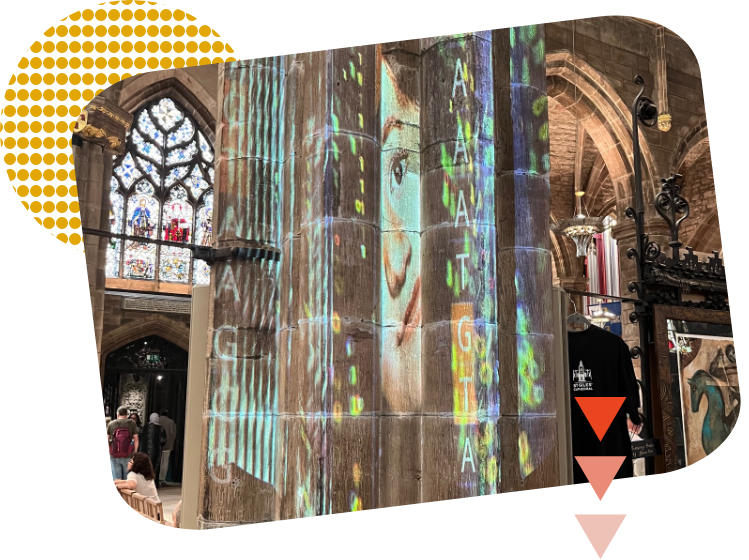
And finally, I went to see ‘Edinburgh’s First Burghers: Revealing the Lives and Hidden Faces of Edinburgh’s Medieval Citizens’, part of the city’s 900-year celebrations at St Giles Cathedral. The interdisciplinary exhibition was a collaboration between the City of Edinburgh Council Archaeology Service and scientific specialists, including experts from the Francis Crick Institute (ancient DNA), University of Aberdeen (isotopic analysis), University of Dundee (forensic art and facial imaging), and the University of Edinburgh. It was a fascinating insight into the people of the day, how they might have looked, how old they were when they died and even what they may have eaten.
Ultimately, this series has shown me that whilst we do need to trust technology, it is even more crucial to trust ourselves – our ability to think critically, make judgements, and discern what is real and what is valuable. Technology can give us tools, insights, and connections, but it is our own reflection and human agency that will allow us to navigate the world with authenticity and purpose. By trusting ourselves, we ensure that technology serves us, rather than the other way around. In the end, trusting technology is important - but trusting ourselves to make sense of it is what truly keeps us human. Technology enabled every single one of the events I went to and was a fascinating central theme in each of them – but it could never have been brought alive without the creativity, engagement and trust of humans.

What do you think? Do you have an experience about trust in tech that you’d like to share?
Get in touch
At eCom we love to hear from people so if you have enjoyed this content from the Thinking Zone or would like to pose a question to our Creative Thinker in Residence then please do get in touch or follow us on LinkedIn.